

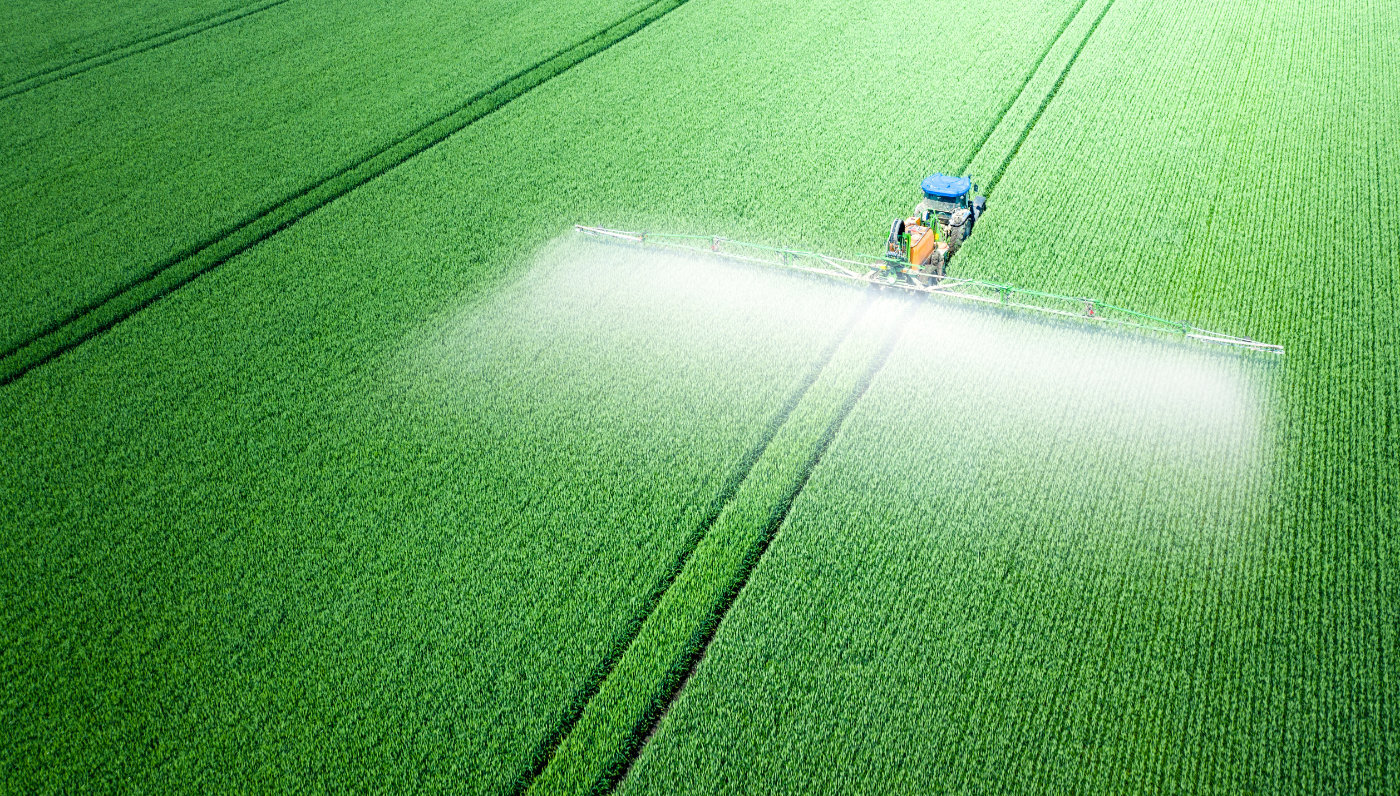
Pesticides are defined by the US Environmental Protection Agency (EPA) as any substance intended for preventing, destroying, repelling, or mitigating any pest.1 Although the majority of pesticide use occurs in large-scale agricultural operations, these substances are also widely used for lawn, garden, and landscape care, in-home pest control, and even direct application to the human body (e.g., lice treatments and mosquito repellents). Hundreds of pesticides are registered in the US under the Federal Insecticide, Fungicide, and Rodenticide Act (FIFRA).2
Types of Pesticides
Pesticides are classified by the type of pest they are targeting. While often misunderstood as referring exclusively to insecticides, the term pesticide also encompasses herbicides, fungicides, and other substances used to control pests.3
Pesticides are also categorized by chemical classes or mechanisms of action – how the chemical interacts with the body at a cellular or molecular level. The same mechanisms that make a pesticide effective against pests can also pose health risks to humans.
Major chemical classes include organochlorines, organophosphates, carbamates, neonicotinoids, and pyrethroids, but not all major pesticides fall neatly into one of these categories.
Individual pesticides like the herbicides glyphosate and atrazine are two examples of chemicals that have garnered significant attention due to their widespread use and scientific evidence of their health impacts.
Common categories of pesticides
- Insecticides kill insects
- Herbicides kill plants
- Fungicides kill fungi and mold
- Nematicides kill plant-parasitic nematodes
- Rodenticides kill rodents
- Antimicrobials kill various microorganisms, generally in preservatives, sterilizers, and disinfectants
Health Impacts
Pesticides work by interfering with biological mechanisms in pests. Because many organisms share similar biological mechanisms, the effects of pesticides often are not specific to one type of organism and can harm others than the target pest, including humans.
Many pesticides are also known to be endocrine disrupting chemicals (EDCs), noted for their effects on our hormone systems. Additionally, some are persistent organic pollutants (POPs), noted for their longevity, toxicity to humans and animals, and ability to be transported through wind and water currents around the globe.
Acute exposure (poisoning)
In the United States, an average of more than 130,000 calls to poison control centers reporting exposure to any pesticides were reported each year from 2006 to 2010, with more than 20,000 cases treated in health care facilities annually. The Agency for Healthcare Research and Quality reported an annual average of 7,385 emergency room visits from exposure to conventional pesticides, excluding disinfectants, during 2006 to 2008, and 1,419 annual hospitalizations from exposure to all pesticides during 2005 to 2009.4
Recent figures worldwide are elusive, but the WHO estimated in 1990 that there are around three million hospital admissions for pesticide poisoning each year, two million of which are as a result of deliberate ingestion, and these result in around 220,000 deaths. However, WHO also noted that "this necessarily reflects only a fraction of the real problem."5
Specific health effects and toxicity symptoms vary across both general classes of pesticides and individual pesticides within classes.
Organochlorine pesticides
Organochlorine pesticides are no longer in widespread use, but because they can persist for decades in the environment, exposures still occur. Well-known pesticides in this category include chlordane, DDT, endosulfan, and lindane. Health effects and symptoms following exposure can include:
- Loss of sensation around the mouth
- Hypersensitivity to light, sound, and touch
- Dizziness
- Tremors
- Nausea
- Vomiting
- Nervousness
- Confusion
Organophosphate or carbamate insecticides
Organophosphate (OP) and carbamate insecticides continue to be in widespread use. Well-known OP pesticides include chlorpyrifos, malathion, and naled. Common carbamates include aldicarb, carbaryl, and maneb. Symptoms and health effects following exposure can include:
- Increased salivation
- Increased perspiration
- Narrowing of pupils
- Nausea
- Diarrhea
- Decrease in blood pressure
- Muscle weakness
- Fatigue
This class of pesticides works by inhibiting the enzyme that breaks down acetylcholine, leading to unnaturally high levels of this important neurotransmitter in the body. The listed symptoms can last up to a few days but decline as soon as acetylcholine levels return to normal.
Pyrethroids
Pyrethroids are some of the most commonly used insecticides worldwide in both agricultural production and vector control. Well-known pesticides in this category are deltamethrin and permethrin. Symptoms and health effects following exposure can include:
- Allergic reactions such as respiratory distress or oral swelling
- Hyper-excitation
- Aggressiveness
- Incoordination
- Whole-body tremors
- Seizures
Neonicotinoids
Neonicotinoids (neonics) are now some of the most widely used insecticides in the world. Common chemicals in this category include imidacloprid and clothianidin. While neonics are considered less acutely toxic than other pesticide classes, their widespread use has led to increased incidence of complications. Symptoms and health effects following exposure can include:6
- Dizziness
- Hypertension
- Tachycardia
- Nausea
- Vomiting
- Eye irritation
- Dermatitis
- Oral mucosal lesions
Long-term health impacts
Long-term exposure to pesticides at levels encountered by the general population have been associated with a variety of chronic health conditions. Studies linking prenatal pesticide exposure to a variety of negative health outcomes, including childhood cancers and neurodevelopmental harms, is particularly strong.
Research is ongoing, and while methodological limitations exist to link specific exposures with outcomes that may occur years later, the weight of the evidence suggests negative health impacts and supports regulatory efforts to reduce exposure.
Cancer
Carcinogenicity of some common pesticides, reflecting information from the Pesticide Action & Agroecology Network (PAN) PesticideInfo Database,7 CHE's Toxicant and Disease Database,8 and the International Agency for Research on Cancer:9
|
Category |
Known Carcinogens |
Probable Carcinogens |
|
Fungicides |
Maneb Nickel sulfate hexahydrate |
Captafol |
|
Herbicides and insecticides |
Arsenic and arsenic compounds Lindane (non-Hodgkin’s Lymphoma) Pentachlorophenol (non-Hodgkin’s Lymphoma) |
Trichlorfon DDT Organophosphates Glyphosate Dieldrin Aldrin |
|
Wood preservatives |
Chromium VI compounds (hexavalent chromium) Creosote |
|
Reproductive and developmental effects
Below are pesticides linked to reproductive and developmental health impacts.10 Specific associations, plus links with limited evidence, are listed in CHE's Toxicant and Disease Database. Information about more pesticides is available from PAN's PesticideInfo Database.
|
Type of Pesticide |
Strong Evidence |
Good Evidence |
|
Fungicides
|
|
Fetotoxicity (miscarriage / spontaneous abortion, stillbirth) Hormonal changes Menstrual disorders (abnormal bleeding, short cycles, long cycles, irregular cycles, painful periods) |
|
Herbicides
|
|
Abnormal sperm Low birth weight / small for gestational age / intrauterine growth retardation Seizures |
|
Insecticides
|
Abnormal sperm |
Hormonal changes Menstrual disorders |
|
Nematicides
|
Abnormal sperm |
|
|
Wood preservatives |
|
Neurodevelopmental & behavioral effects
Many pesticides have been linked to neurodevelopmental and behavioral health impacts.11 Specific associations, plus links with limited evidence, are listed in CHE's Toxicant and Disease Database. Information about more pesticides is available from PAN's PesticideInfo Database.
|
Type of Pesticide |
Strong Evidence |
Good Evidence |
|
Herbicides
|
|
Decreased coordination / dysequilibrium Psychiatric disturbances Parkinson's disease / movement disorders |
|
Insecticides
|
Decreased coordination / dysequilibrium Decreased vision Psychiatric disturbances Behavioral problems Seizures |
|
|
Nematicides
|
|
Decreased coordination / dysequilibrium Decreased vision |
|
Wood preservatives |
|
Cognitive impairment |
Other health effects
In addition to health outcomes associated with exposure to the pesticide groups listed above, additional health harms linked to select pesticides are presented below. Information is from CHE's Toxicant and Disease Database12 unless otherwise noted.
|
Pesticide |
Strong Evidence |
Good Evidence |
|
Aldicarb |
Immune suppression |
|
|
Carbamates |
Asthma - irritant Immune suppression |
|
|
Chlordane |
|
Immune suppression Porphyria (toxic) |
|
Chlordecone |
|
|
|
Chlorpyrifos |
|
Immune suppression |
|
Creosote |
Hyperkeratosis / hyperpigmentation Leukoderma (hypopigmentation) |
|
|
DDT |
Hearing loss Porphyria (toxic) |
|
|
Diquat |
|
|
|
Hexachlorobenzene |
Hyperkeratosis / hyperpigmentation Porphyria (toxic) |
|
|
Maneb |
|
|
|
Methyl bromide |
|
|
|
Paraquat |
||
|
Pentachlorophenol (PCP) |
|
Immune suppression |
|
Pyrinuron (Vacor)13 |
|
|
|
Propoxur |
|
|
|
Pyrethroids |
Pneumonitis (hypersensitivity) |
Asthma allergen, sensitizer |
|
Thimerosal |
Contact dermatitis - irritant |
|
In addition to these health harms, evidence—from studies conducted mostly with animals to date—suggests that pesticides may interact with the human microbiome. For more, see Diet & the microbiome on our Food & Food Packaging page.
Highly Hazardous Pesticides list
It is not feasible to list all the pesticides of concern here. PAN International regularly updates a global list of Highly Hazardous Pesticides (HHPs). The most recent list, updated in December 2024, includes 310 active ingredients.14 PAN International also maintains a list of pesticides banned across the globe; 568 active ingredients are included on the current list, and reflected in this interactive map.
Sensitive and vulnerable populations
Fetuses and children are especially vulnerable to chemical exposures because their brains, reproductive organs, and other systems are still developing. Enzymes responsible for breaking down pesticides into less harmful chemicals, including PON1 and certain cytochrome P450s (CYP450s), are less active in early life. As a result, pesticide use by parents before, during, or after pregnancy can have long-term impacts on children, including birth defects, developmental disabilities, behavior and psychological effects, impaired reproductive function, and cancer.15
Reviews have found that indoor pesticide exposure in childhood is associated with higher risk of leukemia and lymphoma,16 and occupational use of pesticides by parents is associated with a higher risk of brain tumors in children.17 An investigation in 2007 found that girls' exposure to DDT before age 14 increases their risk of breast cancer as adults five-fold. Girls exposed after age 14 did not have an increase compared to girls who were not exposed.18
Early indications of genetic susceptibility to exposures are found in studies of Parkinson's disease and cancer.19 Additionally, genetic variations in enzymes known to metabolize pesticides, such as PON1, have been associated with pesticide sensitivity and are thought to be related to increased likelihood of pesticide-induced health outcomes.20 See the Gene-Environment Interaction webpage for more information.
Environmental justice
Historically marginalized communities bear a disproportionate burden of pesticide impacts. Those who live in close proximity to pesticide production sites or agricultural areas where pesticides are heavily applied face increased exposure. There is extensive research documenting that these communities are significantly more likely to be low-income or identify as people of color. This inequity is a direct consequence of enduring systemic racism and classism.21
Additionally, the agricultural industry’s historical and current reliance on low-wage and often exploitative migrant labor, combined with the persistent lack of protections for workers in the agricultural sector despite the inherent risks, creates a uniquely vulnerable and underprotected workforce.22
Exposure Sources
Pesticide exposures can occur during production, use, or through contact with contaminated areas or products. They can also spread far beyond their original application site via air currents or water, leading to remote exposures. Pesticide exposure is widespread throughout the US.

For most of the US population, exposure primarily occurs through pesticide residues in food and water, residential use in homes and gardens, or use in public spaces.24 Families that live in rural areas and children who attend school near agricultural fields where pesticides are applied face additional exposure risk. Occupational exposure is another major concern, particularly for agricultural workers.
The most common routes of exposure include dermal contact (skin), inhalation, and ingestion, though exposure through the eyes is also possible. Ingesting large quantities of pesticides can result in the most harmful and serious poisonings. Pesticides can be accidentally ingested through drinking from a mislabeled or reused pesticides container, which is why great care should be taken not to mix or store pesticides in food containers and to maintain and follow instructions on pesticide container labels.25
Remote exposures
 Exposures can be several steps removed from the intended use of the pesticide. For example, pesticides applied to lawns could be picked up by a pet's fur, transferred to human hands and then to food, and finally ingested.
Pesticide residues in food and water
Low-level, often chronic pesticide ingestion occurs through residues on pesticide-treated foods. In non-occupationally exposed populations, ingestion of residues in food and water is the primary exposure route. Initial studies have shown measurable, and sometimes dramatic, differences in pesticide residues in urine when a diet of pesticide-treated food sources is compared to an organic food diet.26 In a 2012 policy statement, the American Academy of Pediatrics recognized pesticide exposure as a threat to children’s health and identified diet as a main exposure source.27
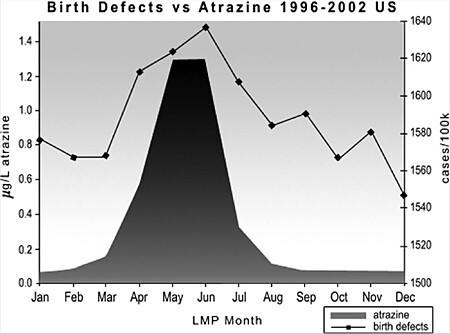
Due to industrial wastewater and agricultural runoff, pesticides are also detected in groundwater and streams throughout the US and globally.29 A study analyzing US birth data from 1996 to 2002 found that babies conceived between April and July, when agrichemicals like nitrates and atrazine are most prevalent in surface water, had a higher risk of birth defects. While the study alone doesn't prove that these chemicals cause birth defects, the strong overlap suggests a link.
Residential exposure
Residential exposure, as classified by the EPA, refers primarily to exposure to pesticides in the home, but also includes exposures as a result of use at schools, parks, and day care centers. Residential exposure to pesticides occurs through both residential applications and pesticide drift. Children who live and/or attend school in agricultural areas are often at particular risk of pesticide exposure, since they can be exposed via pesticide drift in addition to indoor applications.30
A recent survey shows that 75% of US households have used at least one pesticide product indoors in the previous year.31 A study of public housing complexes in Boston found pesticide residues in every surveyed home, with some homes having as many as eight different pesticides. Residual pesticides like chlorpyrifos can linger in household dust or on surfaces long after their application, even years after their sale has been restricted. A study in 2003 found DDT residues in 65% of tested homes 30 years after they were banned.32
According to the EPA and recent academic articles, “Preliminary research shows widespread presence of pesticide residues in homes,” especially in low-income housing.33
Occupational exposure
Workers in the agricultural sector face some of the highest risks of pesticide exposure. This can occur through direct handling of pesticides during application or via contaminated equipment and clothing. Occupational exposure frequently involves dermal contact and inhalation, and farmworkers often carry these pesticides home, inadvertently exposing their families. Occupational exposure and related health risks have also been observed among employees in pesticide production and processing.34
Pets & pesticides
When pets come into contact with pesticide-treated areas or receive flea and tick treatments, their fur can hold onto pesticide residues. These residues may then be transferred—either ingested by pets during grooming or passed on to humans during petting and close contact.
The National Academies symposium highlighted that pets share environmental exposures with humans and often develop related diseases, making them valuable “sentinel species” for detecting health risks earlier. Biomonitoring evidence suggests higher than expected pesticide and chemical exposures to companion animals, and links these exposures to cancers and other health issues.35
Minimizing or eliminating residential pesticide use reduces the risk of pet exposures. To help keep pets safe if pesticides are used, always read and follow product labels, apply flea and tick treatments as directed, and store all pesticide products securely out of their reach. Watch for signs of pesticide poisoning in pets, which may include trouble breathing, heavy drooling, vomiting, tremors, or seizures. If you suspect your pet has been exposed or ingested pesticides, contact a veterinarian or an animal poison control center immediately.
For additional guidance on protecting pets, see the National Pesticide Information Center’s Pets and Pesticide Use Fact Sheet and Tips to Reduce Risk When Using Pesticides Around Pets.
Case Studies: Selected Pesticides
Here we highlight the stories of a few pesticides that have captured popular attention. They are not necessarily the most hazardous pesticides, but they have achieved some notoriety.
Chlorpyrifos
Chlorpyrifos is an organophosphate insecticide that has been widely used in agriculture since the 1960s to control pests on crops such as corn, soybeans, fruit, nuts, and vegetables.36 It works by inhibiting acetylcholinesterase, an enzyme essential for proper nerve signaling. While effective at killing insects, this mechanism also poses risks to humans and other animals.
Acute exposure in people can cause nausea, dizziness, and respiratory paralysis, and can be fatal at high doses. Additionally, a growing body of epidemiological and toxicological evidence investigating chronic and low-dose exposure has shown links between prenatal and early-life exposure to chlorpyrifos and lasting neurodevelopmental harm, including reduced IQ, learning disabilities, attention deficit disorders, and developmental delays.37 Additional studies point to risks of endocrine disruption and potential links to Parkinson’s disease.38
The regulatory history of chlorpyrifos in the US reflects a decades-long struggle between agricultural and chemical industry interests and public health advocates. In 2000, the EPA restricted most residential uses due to risks to children from home pesticide applications.39 In 2007, the Natural Resources Defense Council (NRDC) and PAN petitioned the EPA to revoke all food tolerances, citing growing evidence of developmental harms.40 After years of delays and litigation, the Obama administration proposed banning all food uses in 2015, but this was reversed in 2017 under the Trump administration despite the agency’s own scientists warning of health risks.41 In 2021, the Biden administration announced a nationwide ban on food uses, stating that the agency could not ensure the pesticide met safety standards under the Federal Food, Drug, and Cosmetic Act.
Today, the status of chlorpyrifos remains contested. The 2021 EPA rule removed food tolerances, effectively banning use on edible crops, but recent court rulings in 2023 and 2024 have required EPA to revisit aspects of its decision, leaving growers, states, and advocates uncertain about next steps. Some states, including California, Hawaii, and New York, have already enacted their own bans or phaseouts, regardless of federal action.42 The European Union banned chlorpyrifos in 2020 because of developmental neurotoxicity concerns.43 In December of 2024, the EPA proposed a rule to allow the use of chlorpyrifos on alfalfa, apple, asparagus, cherry (tart), citrus, cotton, peach, soybean, strawberry, sugar beets, and wheat, with use prohibited on all other food crops. After a public comment period, the rule went into effect on July 1, 2025.44
The EPA plans to release an updated Human Health Risk Assessment later in 2025, and issue an amended Proposed Interim Registration Review Decision (PID) for chlorpyrifos for public comment in 2026 followed by an Interim Decision (ID).45
Methyl bromide
Methyl bromide or bromomethane is a highly toxic, odorless, colorless gas used for pest control in agriculture, storage, and shipping. First introduced in the 1930’s, methyl bromide became widely used as a commercial fumigant due to its broad-spectrum effectiveness against insects, fungi, nematodes, and weeds. It became a standard tool in agriculture for pre-plant soil fumigation, post-harvest commodity pest control, and quarantine treatments for exported/imported goods to prevent the introduction of new pests to non-native regions.
Like most fumigants, methyl bromide is a non-specific, highly reactive compound with demonstrated toxicity to cells. Due to its volatility and rapid evaporation, residues in treated food are usually minimal, and the biggest health risks are posed during application, with inhalation being the primary exposure route. Exposure to methyl bromide can damage the respiratory, gastrointestinal, renal, and central nervous systems and may also injure the lungs, eyes, and skin.The initial symptoms in humans acutely exposed to high levels of methyl bromide include headache, weakness, and nausea and vomiting. In more serious cases with higher exposures, these symptoms can also include loss of muscle coordination and speech, tremors, seizures,46 and even death.47
The reactivity and volatility of methyl bromide also contribute to its ozone-depleting potential. As a result, methyl bromide use in the US and many other countries has decreased substantially since its phase out period between 1992 and 2005 under the Montreal Protocol. Critical-use exemptions have been allowed for specific high-value crops and quarantine treatments where alternatives are limited.48
Agent Orange
The US military sprayed an estimated 20 million gallons49 of Agent Orange and other herbicides on trees and vegetation during the Vietnam War. Several decades later, concerns about the health effects from these chemicals continue.50 A mixture of the herbicides 2,4-D and 2,4,5-T, which was also contaminated with dioxin (TCDD), Agent Orange has been associated with these health impacts on the Vietnamese population:
- Birth defects51 including spina bifida,52 and elevated salivary and serum cortisol and cortisone levels.53
Effects in US veterans:
- Increased incidence of diabetes, heart disease, hypertension, and chronic respiratory conditions54
- Good evidence of a link to cancer of the prostate and bladder and soft tissue sarcomas and B-cell lymphomas and also chloracne, as well as limited evidence of an association with Parkinson's disease; type 2 diabetes; hypertension, ischemic heart disease, and stroke; hypothyroidism; early onset peripheral neuropathy; and porphyria cutanea tarda55
In 1969 the Federation of American Scientists submitted a petition to the White House with more than 5,000 signatures of renowned scientists, including 17 Nobel laureates and 129 members of the National Academy of Sciences, to end the herbicide program. In April 1970, the US government restricted use of 2,4,5-T, and therefore Agent Orange, in both Vietnam and the US. In 1971 all the remaining stocks of Agent Orange were gathered and either shipped to Johnston Island in the South Pacific or shipped and stored at the Seabees base in Gulfport, Mississippi, from which they were incinerated on an incinerator ship in September 1977. Contaminated soil was later found at the base.56
DDT
Hailed as the “wonder insecticide of World War II” for protecting troops from typhus and malaria, DDT (dichlorodiphenyltrichloroethane) is an organochloride insecticide that was widely used worldwide from the mid-1940s through the 1960s. Serious concerns about its impact on human health and the environment led EPA to issue a cancellation order for DDT in 1972.
Use in the US and in most countries was discontinued, but because it was widely used, because it persists in the environment without breaking down, and because it bioaccumulates in fat tissue, residues are still a concern and exposures are ubiquitous.57
A 2002 review went so far as to state that “there is not a single living organism that doesn’t contain DDT."58 DDT has been detected in the Arctic, far from any production or use, and in food from all over the world.59

image from Otis Historical Archives National Museum of Health and Medicine at Creative Commons
Although DDT use is banned globally under the Stockholm Convention on Persistent Organic Pollutants, an exemption is granted for vector control of malaria and other insect-borne diseases, primarily in India, China, and sub-Saharan Africa.60
DDT has been associated with cancer in laboratory animals, but no clear evidence has emerged in humans.61 Based on all the available evidence, the US Department of Health and Human Services has determined that DDT is reasonably anticipated to be a human carcinogen. In addition, the International Agency for Research on Cancer (IARC) and EPA have determined that DDT is a probable human carcinogen.62
As an endocrine disruptor, DDT and its metabolite DDE have endocrine effects particularly during development, as demonstrated in animal tests. It can disrupt natural hormone signaling by binding to androgen receptors and blocking signals in cells, causing reproductive and developmental effects.
Studies in humans suggest that high DDT/DDE burdens may be associated with hormonally controlled endpoints such as duration of lactation, fertility, and maintenance of pregnancy. High blood levels of DDE during pregnancy have also been associated with increased odds of having preterm infants, small-for-gestational-age infants, and higher risk of breast cancer in adult children.63 Perinatal exposure of animals to DDT/DDE has caused alterations in the reproductive organs and infertility. In animals, DDT/DDE can produce embryotoxicity, fetotoxicity, and abnormal development of the sex organs. Adult mice administered DDT early in life showed neurobehavioral alterations when tested later in life.64
Reducing Exposures
The most effective way to reduce pesticide exposure is to reduce overall use, and to support and incentivize shifts to safer and more sustainable pest control measures.
Regulation
Most pesticide regulatory systems employ a chemical-by-chemical approach that does not reflect actual exposure patterns, and are thus not adequately protective. Concerns have also been raised about the ongoing influence of the pesticide industry on regulatory decision-making, particularly at the federal level. National legislation has been proposed to address some of these concerns, particularly the need to address pesticides by class and more rigorously account for cumulative exposure and the impacts of chemical mixtures.
US states can currently put measures in place that are more protective of public health than federal regulation — but this system is currently being challenged. Unlike in Canada, in most states municipalities are not able to adopt ordinances that are more protective than state or federal laws.
Worldwide
- Rotterdam Convention, 1998
- Stockholm Convention on Persistent Organic Pollutants, 2001
- Food and Agriculture Organization of the United Nations: The International Code of Conduct on Pesticide Management and Guidelines on Highly Hazardous Pesticides
European Union
- Regulation (EC) No 1107/2009, including amendments and updated versions
- Regulation (EC) No 396/2005
- Directive 2009/128/EC on sustainable use of pesticides
United States
- Federal Insecticide, Fungicide, and Rodenticide Act (FIFRA)
- Federal Food, Drug, and Cosmetic Act (FFDCA)
- Food Quality Protection Act
- Pesticide Registration Improvement Act (PRIA)
- Endangered Species Act (ESA)
- Clean Water Act (CWA)
- Safe Drinking Water Act (SDWA)
- State pesticide regulations
Personal measures
The best way to reduce pesticide exposures is to use them as little as possible. There are safer alternatives for every use of chemical pesticides, such as Integrated Pest Management (IPM) for your home and garden. In a nutshell, IPM prevents household pests naturally by removing their sources of food, water, and shelter and also their access to your home:
- Fix leaky plumbing and prevent wet spots inside and outside your home.
- Wipe up food residues on countertops.
- Seal pet food containers.
- Keep garbage contained and covered.
- Rinse recyclable containers.
- Remove woodpiles from around or inside your home.
- Repair door and window screens.
- Remove diseased plants and fallen fruit that may attract pests to your garden.
- Use natural products in your home; essential oils such as citronella and peppermint have pest-repelling scents.
- Grow pest-repelling herbs and flowers such as basil, marigolds, and lavender alongside your crops to naturally deter harmful insects and attract beneficial pollinators.65
Wipe shoes on doormats and leave them at the door to avoid tracking in pesticide residues. Control dust, which can also contain pesticide residues. Vacuum regularly with a HEPA filter vacuum if possible. Use damp dust rags instead of feather dusters, which stir up dust and disperse it into the air.
If you do store pesticides at home, lock them away from children's reach. Keep toxics in the original containers and follow all warning label directions.
Visit these sites for detailed information about controlling pests with methods and materials that are less toxic to children, pets, and non-targeted wildlife:
- From Beyond Pesticides: ManageSafe™
- From the US EPA: Do you really need to use a pesticide?
- From Pesticide Action & Agroecology Network, two pages: Pets, Garden
Food residues
 Buy organically grown produce whenever you can, especially those foods most likely to contain chemical residues. See the Environmental Working Group's annual lists of the Dirty Dozen and Clean 15 foods.
Always wash fruits and vegetables. Even after washing and cooking foods, pesticide residues may remain, so also peel fruits and vegetables when possible. Unfortunately, some “systemic” pesticides like neonicotinoids can be absorbed by plants through the soil and carried into the fruit or vegetable itself, so no amount of rinsing or peeling will fully remove them.66
Lice treatment
Prevent head lice from becoming unwelcome guests: see Head Lice Prevention from Healthline. If you do contract lice, prioritize removal with lice combs and avoid head lice treatments that contain lindane, especially with children or anyone weighing less than 110 pounds.67
At work
 A key way to reduce pesticide exposure among agricultural workers and applicators is to ensure that health and safety information on labels is clear and accessible to the people using these products. According to the most recent National Agricultural Worker’s Survey, nearly two-thirds of US crop workers speak Spanish as a primary language, yet most labels are still written only in English.68 The Pesticide Registration Improvement Act of 2022 addresses this gap by requiring Spanish translations on the most toxic pesticide labels by December 2025, with all pesticide labels translated by December 2030.69
Follow all label instructions, including use of protective clothing and equipment. Measure, mix, apply, and store pesticides as directed. Ventilate areas during use if recommended. Avoid use that will contaminate water or downwind neighborhoods. Clean up spills according to the manufacturer's instructions. Wash well after handling pesticides, and especially before handling food or eating.
To avoid take-home exposures, leave contaminated clothing and gear at work if possible, and wash skin and hair thoroughly before going home or having physical contact with others. In case of an exposure, seek medical treatment promptly. If you suspect you are pregnant, take extra precaution or see if you can work away from pesticides if possible.70
Employees working in pesticide manufacturing also encounter higher exposure levels than the general population. Using appropriate personal protective equipment (PPE) is crucial for preventing unsafe exposure.71
In your community
 Talk to neighbors, schools, businesses, and government officials about reducing pesticide use on playgrounds, lawns, roadsides, schools, and other public areas.
Several cities, counties, and school districts across the country have taken meaningful steps to eliminate the use of “cosmetic” pesticides on public land and campuses. For instance, the city of San Francisco highly restricts pesticide applications on city-owned property, while Malibu’s Local Coastal Program amendment (effective 2021) bans pesticide use in sensitive coastal habitats. On the East coast, New York City became the largest city to ban routine toxic pesticide use by city agencies in 2021.
Several Canadian provinces and municipalities ban cosmetic pesticide use. Health Canada, the department of Canada’s government responsible for federal health policy, collaborates with local governments to regulate non-essential applications and enforce safe use to protect health and the environment.72
More information on the efforts to move towards pesticide-free practices in schools and public lands, including model policies and tips for kicking off campaigns in your community, can be found at Beyond Pesticides’ Tools for Change.
For more information, explore our pesticide-related webinars.
This page was last revised in October 2025 by Haleigh Cavalier, with input from Kristin Schafer and editing support from Matt Lilley.
 Some information on this page is sourced from Toxipedia.
CHE invites our partners to submit corrections and clarifications to this page. Please include links to research to support your submissions through the comment form on our Contact page.