

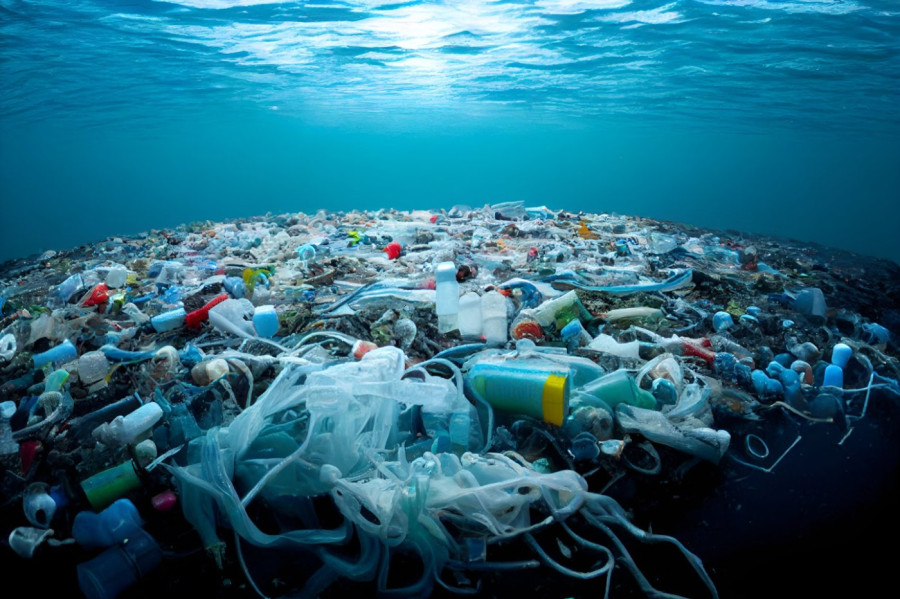


A Global Plastics Treaty is critical not only for tackling the skyrocketing production of plastics and curbing plastic pollution, but also for addressing rising rates of cancer, including breast cancer.
Since 2022, the United Nations has been leading negotiations on a global treaty to regulate plastic production. While the 5th meeting in November 2024 did not result in an agreement, officials from across the globe are gathering again next month in Geneva with the aim of finalizing negotiations.
No, recycling is not the answer
Over the past 35 years, breast cancer rates have been increasing worldwide, especially in people too young to begin screening. Evidence suggests environmental exposures are playing a role, since these trends cannot be fully explained by genetics or dropping fertility rates. What’s more, we are learning that many of the chemicals used in plastics can influence the development of breast cancer.
While recycling can reduce plastic production and pollution, it also creates more opportunities for plastic products to degrade and leach chemicals into the environment and, eventually, into our bodies, where they can harm our health.
That’s why we need a strong Global Plastics Treaty that caps plastic production.
Database of plastic chemicals
To understand the extent of people’s exposures to plastic chemicals that could increase breast cancer risk, we turned to the PlastChem Database. This comprehensive resource includes a compilation of over 16,000 chemicals found in plastics — and their hazard classifications from authoritative sources.
The database reveals a number of important gaps: only one chemical has a complete health hazard classification, while more than 10,000 chemicals have none at all. For many other chemicals, only limited information is available and authoritative classifications require a large amount of evidence.
For example, styrene has been clearly shown to damage DNA, but it has not been fully assessed for bioaccumulation. Bisphenol A is considered a known endocrine disruptor, which means that it interacts with hormones in the body, but it has not been classified for its mobility in the environment.
PlastChem relies on other databases — such as the Database of Chemicals Associated with Plastic Packaging — to compile hazard testing data. At Silent Spring Institute, we decided to use a different approach to build a list of chemicals that might increase breast cancer risk, using other data types that aren’t necessarily included in those databases.
Chemicals with cancer-causing traits
We know, based on previous research and using the key characteristics of carcinogens, that chemicals that disrupt hormones or damage DNA are likely to increase breast cancer risk. Another important tell-tale sign is if a chemical causes mammary tumors in rodents. In an earlier study, we used these key traits to flag 920 chemicals that are relevant to breast cancer.
We then cross-referenced this list of breast cancer-relevant chemicals with the PlastChem Database and found 414 potential breast carcinogens used in plastics.
Regulators are sometimes reluctant to act on these kinds of prioritization strategies without epidemiological evidence of harm in people. While epidemiology is invaluable for showing the effect of a chemical on human health, plastics have become so ubiquitous that identifying people for comparison who are unexposed, or have had very little exposure, is difficult or impossible.
That’s why we need to take action to reduce exposures based on innovative techniques that identify and prioritize the plastic chemicals that deserve further scrutiny and/or regulatory action.
Which chemicals require action?
Only 31 of the potential breast carcinogens that are used in plastics are currently regulated under international agreements, while 383 have no international regulation agreements, including bisphenol A. These are important regulatory targets.
Another prioritization approach is to consider the biological activity of the chemicals. For example, 94 of the chemicals we identified are both DNA-damaging and endocrine-disrupting, and 98 cause mammary tumors in rodents. Combining these sets of chemicals, we selected 175 plastic chemicals as top priorities because of their likelihood to increase breast cancer risk in humans.
Finally, looking at a chemical’s structure can also help with prioritization, since similar chemicals often have similar effects. The PlastChem Database classifies chemicals into structural groups by name and structure (e.g., bisphenol A is a bisphenol) and prioritizes groups that contain a high proportion of harmful chemicals.
Challenges and recommendations
We clearly need timely regulation of these chemicals, but data gaps can prevent action. Many chemicals, for example, lack authoritative hazard classifications.
Fortunately, chemical screening data can help fill these gaps. We found 41 chemicals with data suggesting they could increase breast cancer risk but were flagged as "data-poor" in the PlastChem Database, since they have not been formally classified as hazards.
Another issue is the ubiquity of chemical exposures, which creates barriers to conducting studies in humans. This makes data from cell and animal testing even more critical, and regulators need to take that into account.
Finally, many harmful chemicals appear as substitutions. For instance, bisphenol B is used as a substitute for bisphenol A in plastic production — even though bisphenol B raises similar health concerns. We can avoid these pitfalls by grouping chemicals based on their similarities.
Our biggest challenge, however, is the sheer number of unregulated chemicals. The only practical way to solve this problem is to use prioritization strategies to target the most concerning chemicals. Potential carcinogens are important targets for regulation, and the Global Plastics Treaty is an opportunity we cannot ignore.
"CHE Science Snippet" Webinar Preview
Jennifer Kay, PhD is a Research Scientist at Silent Spring Institute. After completing her PhD and postdoc at the Massachusetts Institute of Technology studying how DNA damaging exposures induce cancer, she now applies that background to study chemical breast cancer risk factors. With the goal of identifying and reducing exposures to the riskiest chemicals, she combines experimental approaches to understand how endocrine disrupting and DNA damaging chemicals cause breast cancer with publicly available toxicity and exposure data to identify which chemicals are most likely to cause this deadly disease in humans.
Rashmi Shakti joined Silent Spring Institute in the fall of 2023 as a Research Associate, after graduating from Harvard with a bachelor’s degree in Applied Math in Biological Sciences. They are applying their computational expertise to identify how chemicals cause breast cancer and which chemicals are most likely to underlie rising rates.