

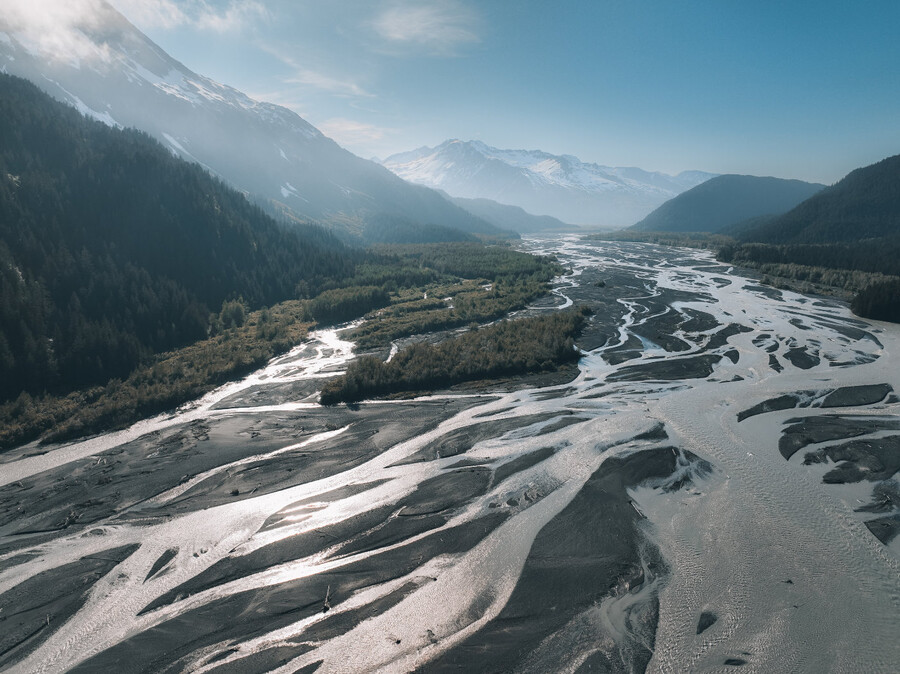

As the climate continues to warm, long-standing environmental contaminants are being mobilized in new and often unexpected ways. A recent CHE-AK webinar explored how mercury pollution and climate change intersect in the Arctic, a region already experiencing rapid environmental change and heightened health risks. Two speakers, Dr. Lee Bell and Dr. Isabel Smith, discussed where mercury comes from, how it moves through Arctic systems, and what these changes mean for ecosystems and human health.
Global sources of mercury & Arctic exposure
Dr. Bell outlined the major sources of mercury, a metal widely used in industrial processes despite its well-known neurotoxicity. Primary sources include:
- Mercury mining
- Mineral refining
- By-products of oil and gas production
Secondary sources arise through recycling and remediation of contaminated sites. Today, the largest share of global mercury pollution comes from:
- Artisanal and small-scale gold mining
- Coal-fired power plants
- Metallurgical industries
- Cement production
- Mercury-containing wastes
Although most mercury emissions originate outside the Arctic, Bell emphasized that the region is affected early and disproportionately. Rising temperatures, shrinking sea ice, and thawing permafrost are transforming Arctic landscapes. At the same time, mercury released at lower latitudes is transported northward through atmospheric processes, accumulating in cold environments through a phenomenon known as global distillation.
Legacy pollution, thawing permafrost, & environmental justice
Bell described several pathways through which mercury is entering Arctic ecosystems. Legacy mercury from decades of fossil fuel combustion and gold mining continues to circulate through the oceans and atmosphere, while thawing permafrost is releasing mercury that has been stored for centuries or longer. Permafrost soils are estimated to hold vast quantities of mercury, and warming temperatures are making some of this contamination newly mobile.
When mercury enters rivers, wetlands, and coastal waters, microbial activity can convert it into methylmercury, a highly toxic form that accumulates in fish and marine mammals. This process contributes to elevated mercury levels in Arctic food webs, with potential consequences for biodiversity and human health. Bell noted that while atmospheric mercury deposition has declined in recent decades, mercury levels in many Arctic species continue to rise, underscoring ongoing gaps in understanding mercury pathways.
Mercury exposure poses serious risks to neurological and cardiovascular health, particularly for populations that rely on traditional foods. Arctic communities face these risks despite receiving little benefit from the activities driving global mercury emissions. This imbalance highlights broader issues of environmental injustice, as the burdens of pollution and climate change fall disproportionately on communities with limited capacity to mitigate or avoid exposure.
Bell noted that while the Minamata Convention on Mercury has reduced some sources of mercury pollution, significant loopholes remain. In particular, mercury use in small-scale gold mining and climate-driven releases from soils and permafrost are not fully addressed.
Researching mercury in a changing Arctic
Dr. Smith expanded on these themes by focusing on ongoing research and monitoring efforts in the Arctic. She provided an overview of mercury-related health impacts, including:
- Effects on the nervous system
- Reduced motor function
- Cognitive impacts
- Cardiovascular conditions
- Hypertension
- Heart disease
Smith highlighted the work of the Arctic Monitoring and Assessment Programme (AMAP), which monitors pollution and climate change impacts across Arctic regions. AMAP’s work helps track trends in mercury exposure and supports assessments of risks to both ecosystems and human health.
Drawing on her research in the Yukon River Basin, Smith described studies examining how permafrost thaw, riverbank erosion, and sediment movement influence mercury transport. Field sites with differing sediment types, erosion patterns, and permafrost conditions revealed that while some mercury stored in permafrost is being mobilized, much of it is reburied downstream.
Smith emphasized that climate change is reshaping mercury exposure in Arctic communities. Changes in diet, food availability, and environmental conditions can increase exposure even without large increases in environmental mercury levels. In some cases, dietary shifts alone may have a greater impact on mercury exposure than permafrost thaw itself.
Looking forward
Together, the presentations highlighted the complex ways in which climate change is altering mercury cycling in the Arctic. Even as some sources of mercury pollution decline, warming temperatures and environmental change are creating new pathways for exposure. The webinar underscored the importance of continued monitoring, research, and policy attention to ensure that efforts to address mercury pollution keep pace with a rapidly changing climate.
For more, see our CHE-AK webinar Mercury in a Warming Arctic: Science, public health hazards & the path forward.
Saoirse McAdams is a Science Writer at Alaska Community Action on Toxics (ACAT) and holds a Master of Public Health in Global Health and Environment from the University of California, Berkeley, where she focused on toxic exposures, environmental health, and sustainable food systems.