

Plastics are often treated as a waste problem, but they are fundamentally a health and climate problem. Derived from fossil fuels, plastics contribute to greenhouse gas emissions at every stage of their lifecycle, from extraction and production to use, disposal, and degradation.
The Arctic is uniquely positioned as both a source of petrochemical extraction and an atmospheric sink where plastics and microplastics accumulate, carried by global air and ocean currents. These impacts threaten fragile ecosystems, food systems, and the health of Indigenous and Arctic communities.
This CHE Alaska webinar explored the deep interconnections between plastics, health, and climate change, with a specific focus on the Arctic. Dr. Leonardo Transande and Rosemary Ahtuangaruak examined the full lifecycle of plastics, the role of fossil fuel expansion in plastic production, and why the Arctic is on the frontlines of this crisis, incorporating a Just Transition perspective, focusing on what it will take to move away from plastic dependence while protecting workers, communities, and Indigenous rights, and building healthier, more sustainable systems for the future.
Featured Speakers
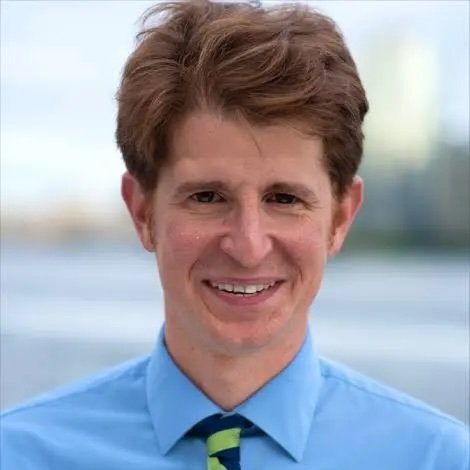
Leonardo Trasande, MD, MPP holds appointments in the Wagner School of Public Service and NYU’s College of Global Public Health. His research focuses on identifying the role of environmental exposures in childhood obesity and cardiovascular risks, and documenting the economic costs of failing to prevent diseases of environmental origin in children. He is perhaps best known for studies that document disease costs due to endocrine disrupting chemicals in the US and Europe. Most recently, his team has documented $249 billion/year in disease costs in the US due to chemicals used in plastics. Dr. Trasande leads a cohort center in the National Institute of Health’s Environmental Influences on Child Health Outcomes program. He has served as a member of numerous scientific committees and expert panels, including: the American Academy of Pediatrics’ Executive Committee of the Council for Environmental Health; the Science and Technical Advisory Committee for the World Trade Center Health Program; the National Children’s Study Methodological Review Panel of the National Academy of Sciences; the United Nations Environment Programme (UNEP) Steering Committee on a Global Outlook for Chemicals; and the Board of Scientific Counselors for the National Center for Environmental Health at the Centers for Disease Control and Prevention (CDC). He represents the Endocrine Society as an observer to the Global Plastics Treaty negotiations, and is an author on the forthcoming World Health Organization/UNEP Second State of the Science Report on Endocrine Disrupting Chemicals.
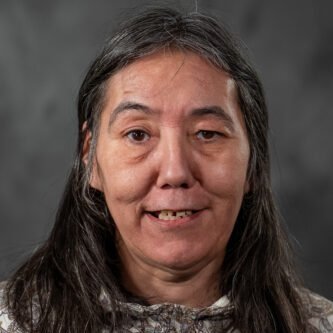
Rosemary Ahtuangaruak is an Iñupiaq teacher, grandmother, mother, tribal leader, and the former Mayor for the Village of Nuiqsut. She stands for the life, health, safety, and the importance of tradition and culture for the people and animals living in the National Petroleum Reserve Alaska (NPRA). Ahtuangaruak is also the founder of the non-profit Grandmothers Growing Goodness, which actively advocates for protections and environmental justice in the NPRA.
 This webinar will be hosted by the CHE-Alaska Partnership, which is coordinated by Alaska Community Action on Toxics (ACAT). Driven by a core belief in environmental justice, ACAT empowers communities to eliminate exposure to toxics through collaborative research, shared science, education, organizing, and advocacy.