
Log in - Help - November 21, 2008
CHE logo The Collaborative on Health and the Environment
This site WWW
WHAT'S NEW

CHE Partnership Call - Growing Danger: Pesticides, Other Agricultural Exposures, and Cancer
Tues, Dec 9 at 10am PT/ 1pm ET


11/20/08: Resources and MP3 recording from the first CHE Café call, featuring the authors of Lake Effect and Poisoned Profits

11/11/08: Comments sought - EU consultation on risk assessment for carcinogenic and mutagenic substances


11/7/08: Dr. Theo Colborn receives 2008 Goteborg Award for Sustainable Development
 

11/7/08: New LDDI fact sheet - Mental Health and the Environment
 

10/27/08: New download - MP3 Recording of "Environmental Threats to Healthy Aging" CHE Partnership Call

10/23/08: NEW REPORT - Environmental Threats to Healthy Aging


10/08: CHE Partner Elise Miller given EPA Children's Environmental Health Champion Award

10/08: CHE Partner Dr. Richard Clapp wins ISEE Research Integrity Award
 

10/20/08: New Parkinson's Disease documents, including a fact sheet and the new Consensus Statement on Parkinson's Disease and the Environment

10/20/08: New President's Cancer Panel fact sheet - Agricultural Exposures and Cancer

10/6/08: NEW SCIENCE REVIEW on Hormone Disruptors and Women's Health, in addition to a lay summary primer [PDF]

10/2/08: NEW - CHE Cancer Consensus Statement [PDF]


Add your events and announcements to the CHE website.

CHE Consensus Statements


CHE Partners on why they value our work 

Send CHE Feedback and Comments...
 

Parkinson's Disease and the Environment Factsheet

Parkinson's Disease and the Environment Factsheet (PDF)

 
What is Parkinson's Disease?


Parkinson's disease (PD) is a chronic, progressive neurological disease that affects a part of the brain that produces dopamine, a chemical that tells muscles how to move. Generally, by the time the disease is diagnosed, up to 80 percent of the dopamine-producing neurons are no longer functioning.

Loss of dopamine leads to a variety of symptoms such as:

•    Tremors (shaking) *•    Muscle rigidity (stiffness)*
•    Slowness of movement
      ("bradykinesia")*
•    Poor balance ("postural instability")*

•    Loss of facial expression – also called
      “masking”

•    Loss of sense of smell
•    Softer voice and/or slurred speech•    Small, cramped handwriting

* These are the four hallmark signs that doctors look for to diagnose Parkinson's disease. Not all people with Parkinson's experience all these signs, especially early in the disease.

Named after Dr. James Parkinson, who first described the symptoms of "shaking palsy" in 1817, the cause of PD remains unknown. Parkinson's disease (PD) affects 500,000 to 1.5 million Americans – more people than the combined numbers of patients with amyotrophic lateral sclerosis (ALS), muscular dystrophy, multiple sclerosis, and myasthenia gravis. Alzheimer's disease is the only neurological disease that affects more people. There are no good statistics on the number of cases because the difficulty of diagnosis in its early stages; lack of lab tests to confirm the diagnosis; and absence of national registry or tracking system.


Who gets Parkinson's disease?

Parkinson's disease affects people of all races, geographic areas and socioeconomic levels. Rates are higher in men than women, although studies dispute by how much. The average age of diagnosis is 60. Eighty percent of people with PD are diagnosed between the ages of 40 and 70, but five percent are diagnosed between 30 and 40 years old. [Weiner, et al]


What causes the primary symptoms of Parkinson's disease?

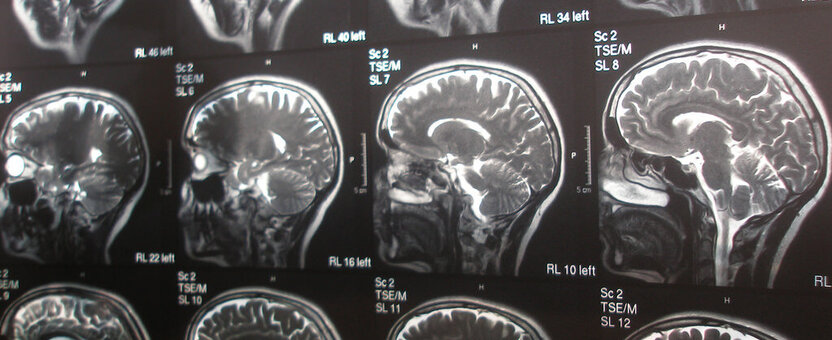
A part of the brain called the substantia nigra is responsible for producing dopamine. Dopamine is one of the neurotransmitters (chemical messengers) that controls muscle movement. In Parkinson's disease (PD), the brain cells (neurons) that make dopamine are damaged or die.


What causes the degeneration or death of dopamine-producing neurons?

No one knows for certain what causes these brain cells to degenerate or die in a large majority of cases, but there are a number of theories.

One theory is that molecules called free radicals damage neurons in a process called oxidation. Free radicals are missing electrons and "steal" them from other molecules. When the body is functioning properly, molecules called antioxidants intercept and neutralize free radicals before they can cause damage. The brain of a person with Parkinson's disease may have more free radicals, fewer antioxidants or both.

Others think that premature aging makes the neurons die long before they normally would. This may be genetic or may be caused by a chemical or a pathogen (germ). Inflammation of these neurons early in life may change their "programming," triggering premature death. Some chemical contaminants are known to kill neurons outright.
           
A protein called alpha-synuclein may be involved in the development of Parkinson's. Researchers have found clumps of this protein in the autopsied brains of PD patients. At this time, the exact role alpha-synuclein may play in causing the disease is unknown.


What are some of the risk factors that might increase the chance of developing PD?

Researchers have identified a number of risk factors for developing Parkinson's disease. These include:

•    Having had a head injury
•    Having a history of depression
•    Living in a rural area•    Drinking well water
•    Being a farmer, rancher, fisher or a
      welder
•    Being frequently exposed to 
      solvents

Studies of twins suggest that Parkinson's disease is not inherited. However, with a younger age of onset, genetic factors appear to be important.  Thus far, six genes have been identified that appear to have a role in the onset of certain cases of PD. In some families, PD is present in more than one generation and research is attempting to define the role of genetics and the shared environmental exposure that may explain the clustering of disease.
           
Many neurologists tell their patients "genetics loads the gun, but the environment pulls the trigger."  "Environmental factors" are often suggested as possible causes of PD. In this case, the term "environment" really refers to the entire world around the individual and thus includes several sources, such as pathogens (e.g., viruses, bacteria), toxic chemicals and heavy metals.
           
The standard against which other chemicals are evaluated when assessing causal links to Parkinson's is MPTP. In the 1980s, some San Francisco drug users mistakenly took MPTP—a compound chemically similar to the pesticide paraquat—instead of heroin. Within weeks or months, many of them developed irreversible Parkinson-like symptoms. The chemical has a consistently similar effect in lab animals.  
           
That trigger could be something other than toxic chemicals, but there is ample evidence to implicate a role for chemicals in the body fostering conditions that destroy dopaminergic neurons.

Some chemicals seem to be directly toxic to neurons. Others may create inflammation in the brain, which reduces the body's resistance to toxins. Another theory is that toxins affect gene expression, meaning that the chemical changes the instructions that the gene gives a particular cell about cell processes, such as cell death. [Myers]

Contracting a viral infection early in life is another risk factor for Parkinson's. Inflammation from such infections could affect the brain's ability to respond to other exposures as the individual gets older. Or it could be that the early viral infection affected the number or the quality of dopamine-producing neurons, making any reduction later in life much more noticeable. Tracking exposure to viruses is also difficult; people may not recall what childhood illnesses they experienced or may not have even been aware that they were sick, especially if illness occurred when they were young. Also, new studies indicate there may be a connection between chronic inflammation caused by allergies and the later development of PD. [Bower, et al.]

A number of pesticide products have been strongly linked to PD in animal studies. Some of those pesticides include:

  • Rotenone, a commonly used plant-based pesticide that is believed to cause both inflammation of the brain, which leads to death of dopamine-producing neurons. [Bin Liu, et al] This compound is often used to kill fish that are considered undesirable or a threat to recreational or commercial fisheries.

  • Paraquat, an insecticide, is chemically similar to MPTP, a compound that induced Parkinson-like symptoms in some individuals who had been attempting to synthesize heroin but made MPTP instead. MPTP is used as a prototype against which the toxicity of other chemicals is measured. Paraquat is applied to a number of food crops, including corn and soybeans – both commonly grown in the Midwest – as well as cotton and fruit. Maneb is used on corn and other vegetables, such as potatoes, lettuce and tomatoes. [University of Rochester]

  • Some fungicides – maneb, for example -- contain manganese, a heavy metal that has long been associated with Parkinson-like symptoms. [Zhou, et al.]

When laboratory mice are exposed to paraquat and maneb at the same time, many of them develop nearly all of the physical signs of PD seen in humans. Corn is one crop that frequently receives application of both products.

Organophosphate pesticides such as chlorpyrifos (Dursban™) and organochlorine compounds such as lindane – a highly toxic pesticide still used in the U.S. to treat head lice – and polychlorinated biphenyls (PCBs) may also have lethal effects on dopamine-producing neurons. [Carpenter, et al.]

Several heavy metals have been implicated as possible contributors to PD. Those include aluminum, iron, lead and manganese. Autopsies on the brains of PD patients have found elevated levels of aluminum and iron. Because of the known neurotoxicity of manganese, many people have expressed concern about the potential health risks of the manganese-based gasoline additive MMT [Dobson, et al.] Welding fumes contain many metals, including manganese, and some studies indicate that exposure to welding fumes may cause Parkinson-like symptoms. [Cersosimo and Koller; Park, et al.]


How could I be exposed to these risk factors?

Exposure to these various risk factors occurs in a number of ways. Clearly, germs travel from person to person quite readily, in many cases. Food, groundwater and surface water may all contain pesticide residues. Airborne pollen may be another source of exposure.  

Some parts of the country have high levels of heavy metals that are naturally occurring in their water supply. Fertilizer products that contain hazardous industrial waste are another potential source of heavy metals in the environment. Sewage sludge, which is land-applied to farmland as a fertilizer in many parts of the country, can contain pesticide residues and other chemicals, heavy metals and pathogens.

Your occupation or workplace may place you in contact with some of these contaminants. As stated earlier, some studies indicate that being a welder or farmer increases your risk of developing PD.


What can I do to minimize my exposure to environmental contaminants for overall better health?

  • Know where contamination sources are. Find out what chemicals are in the products you use every day at home, school and work. Also learn about where community sources of pollution might be, such as hazardous waste sites, incinerators, etc.

  • Buy organic food whenever possible. Shop at farmer's markets or purchase produce, meats and dairy products from local vendors when you can – ask them about the methods they use to grow their crops or raise their livestock.

  • Minimize your exposure to pesticides and heavy metals by using organic gardening methods in your yard and garden. Use non-toxic or least-toxic pest control methods to deal with insects or other pests in and around your home.

  • Use non-toxic cleaning products around your home and workplace.


If I am concerned about the links between pollution in the environment and chronic diseases, such as Parkinson's disease, what can I do?

You can join the CHE Working Group on Parkinson's Disease and the Environment. To learn more about the work group, visit www.healthandenvironment.org/working_groups/parkinsons/.


Become a CHE Partner today!  

It is free and there is no obligation to participate, although we hope that you will discuss your concerns about environmental links to disease with your family, friends, neighbors, co-workers and policymakers.

The Collaborative on Health and the Environment (CHE) is a nonpartisan partnership of individuals and organizations concerned with the role of the environment in human and ecosystem health.

CHE seeks to raise the level of scientific and public dialogue about the role of environmental contaminants and other environmental factors in many of the common diseases, disorders and conditions of our time.

Established in 2002, participation is open to health professionals, researchers, health-affected and patient groups, advocacy organizations and indeed anyone concerned about protecting the health of current and future generations from environmental harm.

Find out more about CHE at: www.healthandenvironment.org.

The Collaborative on Health
   and the Environment
   PO Box 316
   Bolinas, CA 94924


References

Arcaro, K. and D,C. Spink. Understanding the Human Health Effects of Chemical Mixtures." Environmental Health Perspectives Supplement 110: S1 (2002)

Bower, JH, et al. Immunologic diseases, anti-inflammatory drugs, and Parkinson Disease" abstract. Neurology 67:3 (2006)

"Combination of Two Widely Used Pesticides Linked to Parkinson's Disease," University of Rochester Medical Center press release http://www.niehs.nih.gov/centers/2001news/ctrnews5.htm (2001)

Cersosimo, M.G. and W.C. Koller, The diagnosis of manganese-induced parkinsonism abstract. Neurotoxicology 27:3 (2006)

Di Fonzo, A., et al. A frequent LRRK2 gene mutation associated with autosomal dominant Parkinson's disease" LANCET. www.thelancet.com Published online January 18, 2005. image.thelancet.com/extras/04let12014web.pdf

Dobson, AW, KM Erikson, and M Aschner. Manganese toxicity abstract. Annals of the New York Academy of Sciences 1012 (2004)

Gilks, W.P., et al. A common LRRK2 mutation in idiopathic Parkinson's disease. LANCET. www.thelancet.com Published online January 18, 2005. image.thelancet.com/extras/04let12014web.pdf

Lister, S. Allergies Linked to Parkinson's Disease The [London] Times. August 8, 2006.

Liu, B., et al. Parkinson's Disease and Exposure to Infectious Agents and Pesticides and the Occurrence of Brain Injuries: Role of Neuroinflammation, Environmental Health Perspectives, 11:8 (2003) http://ehp.niehs.nih.gov/members/2003/6361/6361.html

Myers, J.P. Gene Expression and Environmental Exposures: New Opportunities for Disease Prevention. San Francisco Medicine, Opinion. April 15, 2004

Nausieda, MD, Paul, and Gloria Bock, M.S.N ., R.N., C.S. Edited by Glenna A. Dowling, R.N., Ph.D. Parkinson's Disease: What You and Your Family Should Know. National Parkinson Foundation, Inc. 1996-99.
http://www.parkinson.org/atf/cf/{F0E9372E-94BC-4BFF-89A3-AF6BAB57D6CF}/what.pdf

Nichols, W.C. Genetic screening for a single common LRRK2 mutation in familial Parkinson's disease LANCET.  www.thelancet.com Published online January 18, 2005. image.thelancet.com/extras/04let12014web.pdf

Park, R.M., et al. Issues in neurological risk assessment for occupational exposure: The Bay Bridge welders.  Neurotoxicology. 27:3 (2006)

Weiner, William J., Anthony E. Lang and Lisa M. Shulman, Parkinson's Disease: A Complete Guide for Patients and Families Johns Hopkins University Press: April

Zhou, Y, et al. Proteasomal inhibition induced by manganese ethylene-bis-dithiocarbamate: Relevance to Parkinson's disease abstract Neuroscience 128:3 (2004)


Download a PDF of this factsheet.


Posted: 14 February 2007


The Collaborative on Health and the Environment
c/o Commonweal, PO Box 316, Bolinas, CA 94924
For questions or comments about the website, email: info@healthandenvironment.org